Author Archives: Reha Yadav

Digital transformation: An important intervention in 2022 and beyond

Digital transformation - the topic has dominated panel discussions and media, with suggestions about how businesses can stay relevant in the digital world. In simple words, digital transformation is about harnessing technology to improve the business, its environment and its customers’ experience.

Why is digital transformation important in 2022?

It enables us to pivot quickly

In the pre-COVID era, organisations were slowly transitioning to more digital business models but as the pandemic hit, it forced dramatic changes within companies and accelerated investment in digital transformation. All of a sudden business started operating remotely. They turned to various digital platforms to streamline internal business processes in order to function to serve their customers. This paradigm shift brought by the Coronavirus made the business world realise that in order to stay competitive and meet the increasing customer demand, going digital is essential. Many of our supply chain customers turned to us for help to streamline their business process during this period. With our cloud-based EDI, we helped our customers get everything onto their accounting software where everyone can access everything remotely. With cloud-based SaaS EDI, the software is hosted in the cloud and managed by a third-party service provider, in this case it’s us. Cloud EDI is web-based and is convenient as companies’ don’t need physical on-site infrastructure, additional resources or licenses. The cloud EDI service provider maintains the software, networks, servers, security and importantly the maintenance for you. It was the companies with cloud-based EDI that companies could transition most smoothly to working from home without interruption to their supply chains.

It reduces the risk of errors and improves customer experience

Customer experience is increasingly becoming key to a company’s long-term success. Digital transformation can help businesses have more agile capabilities both in terms of IT services and user experience. MessageXchange can help you improve your customer experience by reducing the risk of errors by using EDI. With EDI, processes are automated reducing manual errors. For example, when a buyer places a purchase order (PO), and the order can be put into the supplier’s system. The supplier can raise an invoice in their software, which can be sent automatically to their customer’s software. Without EDI, all these processes would be manual which increases the risk of errors. Fewer errors mean a reduction in the number of disputes lodged as a result of accuracy. Businesses can increase customer satisfaction and loyalty by making things easier and faster with more streamlined digital processes.

It makes for more productive employees

With the impact of COVID-19, companies are not sure if their employees will fully return to the office. It is a constant challenge to manage a dispersed workforce. Digital platforms can help managers create productivity improvements and help their employees stay motivated and be more effective in their roles. For departments like finance and HR, digital transformation provides an excellent opportunity to move from traditional paper-based processes to modern automations in areas such as payroll and eInvoicing. With our eInvoicing service you can send eInvoices to your customers almost instantly and be up-to-date on the status of the invoices through the eInvoice response message to see if your customer has received the eInvoice, whether it’s been approved and submitted for payment. These automations free up employees’ time by reducing the need for follow up calls and emails and give them an opportunity to focus on more important tasks.

It’s so much more sustainable

Corporate social responsibility is becoming a necessity, not a choice these days. Many multinational companies are already focusing on sustainability and finding new ways to make their businesses more sustainable. Research by Forest ethics highlighted that Australian businesses and families use over 2.4 million tonnes of paper for printing and writing every year. Every tonne of paper needs 12-24 trees to manufacture. It is estimated that 180 trees are used for just one business each year. eInvoicing cuts out the need for paper as the invoices are exchanged electronically. Going digital is a good first step to make your business more environmentally friendly. Paperless communication and transaction mean practically no use of paper and energy used in production and transportation of paper documents. If you want to learn more about how EDI and eInvoicing can help your business smoothly transition and adopt digital processes, request a call back from our experts below.

Request a call

Chat with one of our experts

Just fill out your details below and we'll be in touch within one business day.
EDI in the retail industry

Major players in the retail industry have taken advantage of the benefits of electronic data interchange (EDI) over the last 30 years. But there are still some companies that use paper-based procurement. This shows EDI still has potential to deliver even more benefits and savings to the industry. EDI in the retail industry allows companies to electronically exchange documents like purchase orders, despatch advices, invoices and other documents with suppliers. It replaces the manual process of sending these documents via email, fax and other ways of communication. Businesses in the retail industry generally issue a high volume of orders and EDI helps to improve operational efficiency and reduce the turnaround time to process purchase orders and invoices. It also has added benefits like providing more visibility and better customer service.

How is EDI used in the retail industry?

EDI is extensively used in the retail industry. This sector uses EDI for procurement, shipping as well as invoicing. In the procurement process, two basic EDI documents are used: purchase order and purchase order response. The buyer sends the purchase order to the supplier and the supplier then sends the purchase order response back to the buyer. This tells the buyer what can be fulfilled. In the second stage, shipping, the main EDI document used is the advance shipping notice. The supplier sends the ASN to the retailer to notify them about the shipment. It tells the buyer things like what’s being sent in each package, when it’ll be sent, by whom and more. In the final stage, the supplier issues an EDI invoice and sends it to the retailer. The retailer’s accounts payable team can generate an EDI remittance advice and send it to the supplier to confirm payment.

Why is EDI important in the retail industry?

Customer demands for good quality products, competitive deals and low prices have grown enormously, but the expectation for fast delivery has increased more than ever. Retailers today struggle to keep up with the high delivery frequency and keep count of stock (SKUs). EDI helps in automating this process. EDI purchase orders enable retailers to specify store destination with quantities of each product in a single document, the supplier, on the other hand, processes these purchase orders, ships products directly to the stores and sends advance shipping notice with details of products and quantities being shipped. It is because of this EDI process that retailers are able to fast track the delivery process, have visibility of SKUs and reduce human errors and turnaround time. There are also benefits when it comes to receiving invoices. For retailers who receive thousands of invoices a month, the time it takes to enter each invoice into their accounting software can really add up. Not to mention it opens the floodgates to mistakes being made. It’s easy to do a quick calculation of what this might cost a business by multiplying the number of invoices by the time it takes to enter each one by staff members’ salary. It all adds up. Some retailers use scanning or optical character recognition (OCR) but this is usually error-prone and can chew up time just fixing the errors. These processing figures can be slashed if a retailer uses EDI to receive invoices directly into their software. It’s like magic. EDI gives a competitive advantage to companies in the fast-moving retail sector. The Good Guys approached us with the aim to get their suppliers trade electronically with them. They saw EDI as a strategy to have an edge over their competitors. Learn more on how MessageXchange helped The Good Guys achieve this objective and get tremendous results here.

Benefits of EDI for retailers, suppliers and distributors

It reduces errors and saves costs

Traditional procurement involves a lot of manual processes. There is a potential for expensive errors with every instance of human intervention. EDI eliminates manual work, automates the process and reduces transaction errors by 30 to 40 percent. Retailers and suppliers can save costs and reduce errors with EDI integration. They can save up to 90 percent of invoicing costs with EDI.

Shorter transaction times

EDI messages can be exchanged in minutes in contrast to the paper-based documents which can take days to be delivered. These reduced cycles lead to faster invoice processing and improved cash flow. Retailers receive EDI invoices directly into their software so they can process them quickly and efficiently. Target, an Australian department store that operates more than 300 stores in the country, wanted to achieve visibility and remain current and transparent in the fast-moving retail industry. Read how MessageXchange helped Target achieve their goal here.

It frees up time for staff to spend on more valuable tasks

EDI in the retail industry helps to automate processes and lets employees focus more on higher value tasks. Instead of spending time data entry, your staff can spend time on more strategic work to help your business grow. EDI helps both retailers and suppliers to streamline their business process and use their resources mindfully.

EDI documents used in the retail industry

[vc_column width="1/4" css=".vc_custom_1618271818355{padding-right: 10px !important;}"]

Message Types

Purchase Order

Purchase Order Response

Invoice

Despatch Advice

Remittance Advice

Product Catalog

Functional Acknowledgement

[vc_column width="1/3" css=".vc_custom_1628228479994{padding-right: 10px !important;padding-left: 10px !important;}"]

Description

Sent from buyer to supplier to order goods or services

Sent from the supplier to the buyer to let them know how much of the order can be fulfilled, and any discrepancies from the original order

Sent from the buyer to the supplier for payment of the goods or services

Sent from the supplier to the buyer to let them know when and how the goods will be shipped

Sent from the buyer to the supplier to confirm payment

Sent from the supplier to the buyer with up-to-date product and pricing information

An automated response sent from a receiver of an EDI message to confirm receipt of the message

[vc_column width="1/6" css=".vc_custom_1628228971532{padding-right: 10px !important;padding-left: 10px !important;}"]

ANSI X12

850

855

810

856

820

832

997

[vc_column width="1/6" css=".vc_custom_1628229725830{padding-right: 10px !important;padding-left: 10px !important;}"]

EDIFACT

ORDERS

ORDRSP

INVOIC

DESADV

REMADV

PRICAT

CONTRL

If you want to learn more about how EDI works in the retail industry, have a look at our case studies or request a call back from our EDI experts below.

Request a call

Chat with one of our experts

Just fill out your details below and we'll be in touch within one business day.
Which reigns supreme: on-premise or cloud-based EDI?

In the age of digital transformation, customer demands are constantly evolving. It’s important for businesses to not only keep up with those demands but also invest in upgrading their technology to suit. Electronic data interchange or EDI has been around for decades and it’s still an effective way for supply chains to standardise communication. However, some traditional EDI methods have their limitations that make it difficult for businesses to meet demands in today’s sometimes-turbulent times

On-premise EDI software

On- premise EDI software is owned by the business using it and everything from implementation to running the solution is usually done internally. The software is physically on-site and is operated from an in-house server with a connection to an ERP system. On-premise EDI solutions require the company to have an EDI software license, an in-house server, a network and IT staff to support the software.

Cloud- based SaaS EDI software

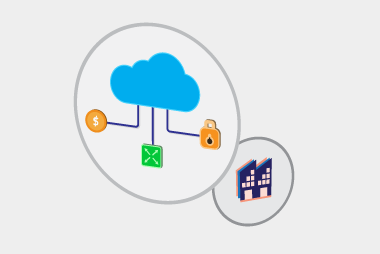
With cloud-based SaaS EDI, the software is hosted in the cloud (i.e not on-site) and managed by a third-party service provider. Cloud EDI is web- based and is convenient as companies don’t need to invest in any infrastructure, additional resources or licenses. The cloud EDI service provider maintains the software, networks, servers, security and importantly the maintenance for you.

On-premise vs cloud-based SaaS EDI

On-premise EDI software is a more traditional way of exchanging electronic documents through software that is purchased up-front and you own a license to it. It’s your responsibility to complete all software upgrade and backups. Whereas cloud-based, outsourced EDI is more modern and is slowly overtaking on-premise EDI. It’s usually based on a subscription model where businesses pay their service providers for use and maintenance of their solution.

The key differences in on-premise and cloud EDI are:

Cost:

On-premise EDI: An on-premise software requires a lot of effort and can come with large up-front and on-going costs. The initial investment of buying and implementing the software, servers and network and the on-going maintenance and operating cost makes on-premise EDI can be expensive. It may also require extra resources to manage the service within the business. Cloud- based EDI: On the other hand, a cloud-based EDI service is relatively more cost effective and customers have the added bonus of only paying for what they use. Customers don’t have to worry about the maintenance and operating cost as the cloud service provider takes care of all of that, and it’s included in the subscription cost.

Security:

On-premise EDI: Security is the primary concern of many organisations when it comes to procurement and financial transactions. Even though it is believed by many that on-premise EDI solution is more secure as it is in -house and the potential of the information being leaked is less, there are numerous measures that have to be taken to keep your data secure. Your team need to stay on top of security patches and make sure the software is constantly up-to-date to cater for any vulnerabilities. Cloud- based EDI: With cloud-based EDI software, the service provider should have multiple security protocols to keep your data safe. For example, MessageXchange is ISO27001 certified. We maintain the service to this standard and we're audited for this. We also have a team dedicated to ensuring our software it always up-to-date and not exposed to vulnerabilities.

Scalability:

On-premise EDI: When your business grows and you need to trade more electronic documents, on-premise EDI can require you to purchase additional hardware and make more investments to cater for the growth. It can be difficult to scale up your business seamlessly if you’re using on-premise EDI software. Cloud- based EDI: With cloud-based EDI software, it’s pretty easy to scale up your business if your EDI provider has the right infrastructure. Your service provider takes care of the scalability and you can spend more time on the more important tasks for your business and continue to grow. Here at MessageXchange, we’re constantly monitoring the message volumes going through our service to ensure we have ample room to cater for our customers requirements. If you want to learn more about cloud-based SaaS EDI solutions and understand how we can help your business, request a call back from our EDI experts below.

Request a call

Chat with one of our experts

Just fill out your details below and we'll be in touch within one business day.
eInvoicing FAQs

1. What integration options do you offer?

We can integrate with any ERP system but some of the common ones we offer integration with are MYOB AccountRight/New Essentials, TechnologyOne CiAnywhere, Basware, Microsoft Dynamics, Oracle (on premise and cloud), SAP (on premise and cloud), NetSuite and Intuit Quickbooks. We’re continuing to add more cloud software to our eInvoicing products, so keep checking back!

2. What is your pricing?

eInvoicing Connect:

eInvoicing Connect is our simplest product for you to get up and running with eInvoicing quickly, easily and with minimal investment. Here’s how it’s charged:
  • Annual subscription to MessageXchange's eInvoicing Access Point: $50
  • Credits: $50 for 1,000 credits
    • Credits are charged at $50 for 1,000 credits. 1 credit is 10kb, or part thereof, of data.
    • For more information on how billing works, click here.
*Support charges may apply

eInvoicing Gateway:

Our eInvoicing Gateways give you full flexibility on how you implement eInvoicing. You can choose your connection protocol (sFTP, AS2, API or something else) and we can map your software’s native file format (like XML or CSV) to the Peppol UBL. Our pricing depends on your requirements – if we need to do any mapping, and customisations and the volume of eInvoices you exchange. Fill out the request a quote form on our website so we can send you some more accurate pricing.

3. Can I send/receive eInvoices with attachments?

Yes, the Peppol standard supports attachments in eInvoices and our solution supports this too. Attachments can be in formats such as PDF, CSV and xlxs.

4. How long does it take to implement eInvoicing?

The implementation time varies with every solution. For eInvoicing Connect, implementation takes about 1 day in total, which also includes testing. For eInvoicing Gateways, the implementation time varies depending on your requirements and complexities.

5. What is the biggest challenge when it comes to eInvoicing?

On-boarding suppliers can be a challenge. Because eInvoicing is still in its early stages, there can be a lack of awareness of it, as well as reluctance to get onboard. We offer free- and low-cost-solutions to help get suppliers on-boarded. Colladium, a business network for collaboration and trade, allows companies to register for eInvoicing within minutes. It's free to use and is accessible from a web browser for companies to send and receive Peppol-compliant eInvoices. We also offer low-cost eInvoicing integrations to MYOB and TechnologyOne through our eInvoicing Connect product, with plans to this available to other software users in the future.

6. How can I see if my trading partners can send/receive eInvoices?

Anyone can search the Peppol directory to find out if a business can receive eInvoices. We also offer integrated solutions to our customers to easily check if their trading partners are eInvoicing enabled. Have a chat with us to find out more. And if you try to send an eInvoice to someone who can’t receive it, we’ll let you know!

7. I need a purchase order number/bank details/something else to process an invoice in my software. How do I make sure I receive this on eInvoices?

For customers who subscribe to an eInvoicing Gateway, we can configure your own business rules in your Gateway to check that incoming invoices have certain data present, like an order number or bank details. If we find that the eInvoicing doesn’t have these details, we can automatically send a response message (business level response or BLR) back to the sender to let them know that the invoice has been accepted or rejected and notify them of what action they need to take, if any. Have a chat with our team to find out more. Talk to our team about getting started with eInvoicing.

Request a call

Chat with one of our experts

Just fill out your details below and we'll be in touch within one business day.
Five reasons you should start issuing eInvoices to your government customers

The Australian economy is starting to repair itself after the economic challenges faced from the pandemic. Even before the pandemic hit, the Commonwealth government identified eInvoicing as a key driver to improve the economy and in the latest budget, committed $15.3m to accelerate the adoption of eInvoicing. All federal government agencies will need to have the ability to receive eInvoices by July 1, 2022. State and local government agencies, as well as the business community are also encouraged to follow suit in adopting eInvoicing.While we can see notable benefits for the government, the benefits of eInvoicing for suppliers to government shouldn’t be overlooked.

Here are five reasons you should start issuing eInvoices to your government customers:

Save money

Peppol eInvoicing is completely paperless and suppliers who adopt eInvoicing can reduce processing costs by over one third. The ATO estimates the cost to process a PDF invoice to be $27 and the cost of processing an eInvoice to be less than $10. eInvoicing provides increased accuracy, so suppliers will save costs from reduced errors and requests for re-issues and customer service calls. Your employees can use this time on other important tasks.

Get paid faster

The Commonwealth government has announced a five day payment policy for suppliers who issue peppol eInvoices and have contracts valued under $1m. Government agencies will pay their suppliers within five days or pay interests on late payments.

Fewer Rejected Invoices

An eInvoice is transmitted electronically from the supplier’s software to the buyer’s software, eliminating manual processes and a lot of errors. As a result of the reduced errors, the risk of invoices getting rejected is lowered.

Improve productivity

eInvoicing is almost instant, so suppliers can be confident their customers will receive eInvoices straight away. Suppliers can be kept up-to-date on the status of the invoices through the eInvoice response message to see if their customer has received the eInvoice, whether it’s been approved and submitted for payment, reducing the need for follow up calls and emails. eInvoicing also reduces the number of disputes lodged as a result of its increased accuracy.

Eco- friendly

eInvoicing is environmentally friendly as there is practically no use of paper and energy used in production and transportation of paper invoices is reduced. You also do not have to worry about the physical space used to store the paper invoices or worry about losing them! If you’re a government supplier and are interested in learning more about eInvoicing and it’s benefits for you, request a call from our eInvoicing experts below.

Request a call

Chat with one of our experts

Just fill out your details below and we'll be in touch within one business day.