Monthly Archives: March 2026

How EDI helps retailers automate invoice matching and reduce disputes

For retailers across Australia and New Zealand, processing supplier invoices can be one of the most time-consuming parts of the supply chain. When invoices arrive by email or PDF and need to be manually checked against purchase orders and delivery records, mistakes and delays are almost inevitable. Invoice discrepancies such as incorrect pricing, quantities, or missing order numbers can quickly lead to disputes between retailers and suppliers. This is where electronic data interchange (EDI) can make a significant difference. By automating how invoices are created, transmitted and validated, EDI helps retailers streamline invoice matching and reduce disputes.

The challenge of manual invoice matching

Finance or accounts payable teams match supplier invoices against purchase orders and delivery receipts to ensure everything lines up. This process, often called three-way matching, checks that:
  • the purchase order (PO) reflects what was ordered
  • the goods receipt or delivery record confirms what was delivered
  • the invoice matches both the order and the delivery.
When this process relies on manual checks, common problems arise:
  • Incorrect or missing PO numbers
  • Pricing differences between order and invoice
  • Quantity mismatches
  • Delayed or duplicated invoices
  • Time spent investigating discrepancies.
As a retailer, when your supplier network grows these issues can multiply quickly.

How EDI changes the process

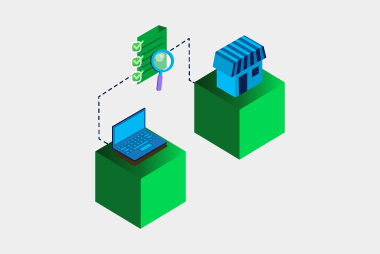
EDI replaces manual documents with structured digital messages that flow directly between systems. When retailers and suppliers exchange purchase orders, shipping notices and invoices through EDI, the information is standardised and automatically captured. This creates the foundation for automated invoice matching. Instead of manually reviewing documents, the retailer’s system can automatically compare the invoice against the original order and delivery data. Retailers can automate three-way matching to verify:
  • item numbers
  • quantities
  • prices
  • order references.
Inconsistent or incomplete information can also create invoice disputes. EDI helps eliminate these problems by ensuring that key data fields are standardised and validated before the invoice is processed. For example, EDI can ensure that:
  • the correct PO number is included
  • product codes match the retailer’s system
  • pricing aligns with the original order
  • GST is calculated correctly.
By catching errors early, or preventing them altogether, EDI significantly reduces the number of invoices that require manual investigation.

Faster payments and stronger supplier relationships

When invoices are matched automatically and approved faster, suppliers benefit as well. Payments can be processed more quickly and with fewer queries from the retailer’s finance team. Leading to improved supplier satisfaction and less back-and-forth communication. For retailers working with hundreds of suppliers, these improvements can have a major operational impact.

Freeing finance teams to focus on higher-value work

Automating invoice matching doesn’t just reduce disputes, it also frees up valuable time for finance teams. Instead of manually checking invoices, staff can focus on:
  • investigating genuine exceptions
  • improving financial reporting
  • managing supplier relationships
  • supporting strategic business initiatives.
Want to learn more about EDI can help you better manage and automate invoicing? Get in touch with our experts.

Request a call

Chat with one of our experts

Just fill out your details below and we'll be in touch within one business day.

Preparing for New Zealand’s upcoming eInvoicing mandate for large government suppliers

eInvoicing adoption across Australia and New Zealand has been steadily growing over the past few years. But in New Zealand, things are about to accelerate. An upcoming government mandate will require large suppliers to send eInvoices when doing business with government agencies. For businesses working with the public sector, this is an important milestone, and a signal that digital invoicing is becoming standard practice. Here’s what the upcoming mandate means and how suppliers can prepare.

What the new mandate involves

From 1 January 2027, New Zealand government agencies must require large suppliers to send invoices electronically using the Peppol eInvoicing network. The rule applies to suppliers that:
  • have annual revenue over NZ$33 million, and
  • provide goods or services to government agencies.The goal is to modernise procurement and payments across the public sector while encouraging wider adoption of eInvoicing throughout the New Zealand economy.

Why the government is introducing the mandate

The move to eInvoicing helps address several long-standing challenges in invoice processing. Government agencies expect the change to:
  • reduce manual invoice handling
  • minimise data entry errors
  • speed up processing and approvals
  • improve payment reliability
  • support better financial transparency.
By using the Peppol network, invoices are exchanged securely and directly between finance systems, removing the need for emailed PDFs and manual entry.

How suppliers can prepare

The good news is that getting started with eInvoicing is usually straightforward. Most modern accounting and ERP platforms already support Peppol eInvoicing. To prepare, suppliers should:
  1. Check whether their accounting software supports Peppol eInvoicing.
  2. Register on the Peppol network through their software provider or a certified access point.
  3. Test sending eInvoices with customers before the mandate comes into effect.
  4. Train finance teams on the new process and workflows. Taking these steps early helps avoid last-minute pressure as the deadline approaches.
For many organisations, the move to eInvoicing also opens the door to broader finance automation.Register for our webinar “The 2027 eInvoicing mandate playbook: How to get ready and avoid common mistakes” to learn more about the einvoicing changes in New Zealand and where to start here.

Request a call

Chat with one of our experts

Just fill out your details below and we'll be in touch within one business day.